

Trump Reinstates Maritime Blockade on Iran as West Asia Conflict Escalates
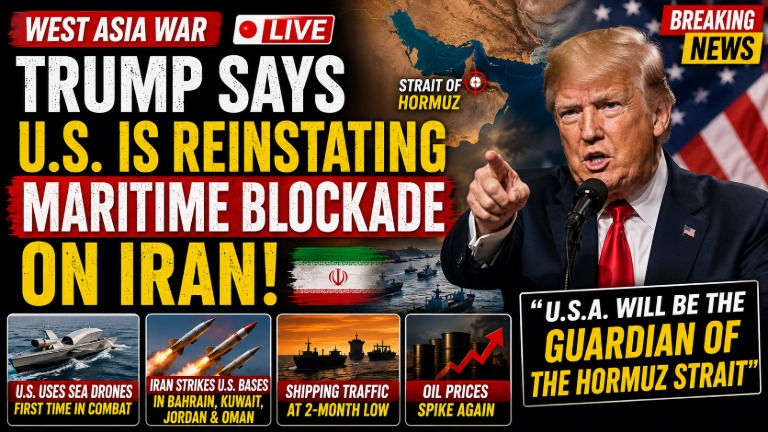
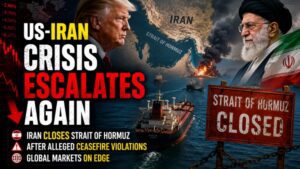
The conflict between the United States and Iran has entered another dangerous phase after U.S. President Donald Trump announced the reinstatement of the maritime blockade on Iran, further intensifying tensions around the strategically vital Strait of Hormuz.
The announcement came amid fresh military exchanges, attacks on commercial shipping, and growing fears that one of the world’s most important energy corridors could face prolonged disruption.
The latest developments have triggered renewed concerns over global oil supplies, shipping safety, and regional stability.
Trump Declares U.S. ‘Guardian of the Hormuz Strait’
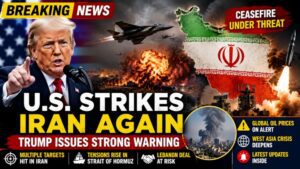
In a statement posted on Truth Social, President Trump declared that the United States was restoring its maritime blockade against Iran.
According to Trump:
- The blockade would target Iranian ships and customers.
- Other countries would continue to enjoy free navigation.
- The U.S. would act as the “Guardian of the Hormuz Strait.”
- Washington would seek reimbursement equal to 20% of cargo value for providing maritime security.
The proposal has immediately attracted global attention because the Strait of Hormuz remains one of the world’s busiest energy trade routes.
UN Questions Proposal for Cargo Charges
The International Maritime Organization (IMO) responded cautiously to Trump’s announcement.
According to the UN shipping agency:
- More details are still awaited.
- International law does not support mandatory transit fees through international straits.
- IMO continues to oppose charging vessels simply for passing through internationally recognized waterways.
The agency emphasized that the Strait of Hormuz remains an international navigation route governed by maritime law.
Strait of Hormuz Remains at the Centre of the Conflict
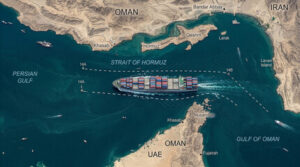
The Strait of Hormuz has once again become the biggest flashpoint in the ongoing Iran-US confrontation.
Although Iran previously claimed the waterway had been closed, shipping data indicates that limited commercial traffic continues.
Recent maritime tracking data shows:
- Only a small number of ships crossed the strait.
- Tanker traffic has fallen to its lowest level in nearly two months.
- Several vessels have reportedly switched off AIS tracking systems due to security concerns.
Shipping experts warn that any prolonged closure could severely impact global energy markets.
US Uses Sea Drones in Combat for First Time
The United States confirmed that it used one-way attack sea drones for the first time in combat operations.
According to U.S. Central Command (CENTCOM):
- Three Corsair sea drones struck facilities at Bandar Abbas Port.
- The target included submarine and naval maintenance infrastructure.
- The operation aimed to reduce Iran’s ability to threaten commercial shipping.
Military analysts describe the strike as a significant evolution in modern naval warfare.
Iran Launches Fresh Retaliatory Attacks
Iran’s Islamic Revolutionary Guard Corps (IRGC) claimed responsibility for multiple retaliatory strikes across the Gulf region.
According to Iranian state media, the attacks targeted:
- U.S. military facilities in Bahrain.
- Prince Hassan Air Base in Jordan.
- Ali Al Salem Air Base in Kuwait.
- Radar systems in Oman.
Several Gulf nations activated air defence systems following the reported missile and drone attacks.
Oil Prices Rise Again
The renewed fighting has once again shaken global energy markets.
Oil prices climbed sharply after:
- Fresh U.S. military strikes.
- Iranian retaliation.
- Increased uncertainty over the Strait of Hormuz.
Market analysts warn that if shipping disruptions continue, crude oil prices could witness further volatility in the coming weeks.
Global Leaders Call for Immediate De-escalation
The renewed military escalation has triggered strong international reactions, with several countries urging both Washington and Tehran to return to diplomatic negotiations.
Germany, France and the United Kingdom
The E3 nations—Germany, France and the United Kingdom—issued a joint statement condemning attacks on commercial shipping and Gulf countries.
The three nations:
- Condemned attacks on merchant vessels in the Strait of Hormuz.
- Called for an immediate restoration of the ceasefire.
- Urged both sides to resume diplomatic negotiations.
- Expressed concern over growing instability across West Asia.
The European powers warned that continued fighting could severely disrupt global energy security and international trade.
Yemen Conflict Adds Another Layer to the Crisis
The conflict expanded further after Yemen’s internationally recognised government claimed responsibility for attacks targeting Sanaa International Airport.
According to officials:
- The strike was intended to prevent an Iranian aircraft from landing.
- Authorities alleged the aircraft was violating Yemeni airspace.
- The Houthis accused Saudi Arabia of carrying out the attack.
- The United Nations urged all parties to avoid further escalation.
The situation has increased fears that the regional conflict could spread across multiple countries.
Iran Continues Diplomatic Efforts
Despite the military escalation, Iran said it remains engaged in discussions with mediators including:
- Qatar
- Oman
- Pakistan
Iranian officials stated that these diplomatic efforts are aimed at preventing the conflict from expanding further and finding a political solution.
Why the Strait of Hormuz Matters
The Strait of Hormuz is one of the world’s most strategically important waterways.
Key facts include:
- Nearly 20% of the world’s traded crude oil passes through the strait.
- It connects the Persian Gulf to the Arabian Sea.
- Major oil exporters including Saudi Arabia, Iraq, Kuwait, the UAE and Iran depend on this route.
- Any disruption can immediately affect global fuel prices.
Because of its strategic importance, every military development in the region receives close attention from global markets.
Impact on Global Markets
The latest escalation has already begun affecting international markets.
Potential consequences include:
- Rising crude oil prices.
- Higher transportation and shipping costs.
- Increased insurance premiums for commercial vessels.
- Possible fuel price increases across importing countries.
- Volatility in global stock markets.
Energy analysts believe prolonged instability could create additional inflationary pressures worldwide.
Key Highlights
- Donald Trump announced the reinstatement of the U.S. maritime blockade on Iran.
- The U.S. declared itself the “Guardian of the Strait of Hormuz.”
- The UN shipping agency questioned the legality of cargo charges.
- The U.S. used sea drones in combat for the first time to strike Bandar Abbas.
- Iran launched retaliatory attacks targeting U.S. military facilities in Bahrain, Kuwait, Jordan and Oman.
- Shipping traffic through the Strait of Hormuz dropped to a multi-week low.
- Oil prices climbed amid fears of prolonged disruption.
- European nations called for an immediate return to diplomacy.
Frequently Asked Questions (FAQs)
Why did Trump reinstate the maritime blockade on Iran?
According to President Trump, the blockade is intended to stop Iranian ships and protect international shipping through the Strait of Hormuz while ensuring safe passage for other nations.
What is the Strait of Hormuz?
The Strait of Hormuz is a narrow waterway connecting the Persian Gulf with the Arabian Sea and is one of the world’s busiest oil shipping routes.
Why are oil prices increasing?
Oil prices are rising because investors fear that military conflict could disrupt energy supplies passing through the Strait of Hormuz.
Has the Strait of Hormuz completely closed?
No. Although traffic has reduced significantly, some commercial vessels continue to transit the waterway under heightened security risks.
Why is Bandar Abbas important?
Bandar Abbas is Iran’s principal commercial and naval port, playing a key role in maritime trade and naval operations.
Conclusion
The renewed confrontation between the United States and Iran marks another significant escalation in the West Asia conflict. With military strikes, retaliatory attacks, diplomatic tensions and growing uncertainty surrounding the Strait of Hormuz, global attention remains firmly focused on developments in the region.
As negotiations struggle to resume and commercial shipping faces increasing risks, the coming days could prove crucial not only for regional stability but also for international energy markets and global economic confidence.
ಕನ್ನಡ ಮುಖ್ಯಾಂಶಗಳು
- ಅಮೆರಿಕ ಅಧ್ಯಕ್ಷ ಡೊನಾಲ್ಡ್ ಟ್ರಂಪ್ ಇರಾನ್ ವಿರುದ್ಧ ಸಮುದ್ರ ನಿರ್ಬಂಧವನ್ನು (Maritime Blockade) ಮರು ಜಾರಿಗೊಳಿಸಿದ್ದಾರೆ.
- ಹೋರ್ಮುಜ್ ಜಲಸಂಧಿಯಲ್ಲಿ ಉದ್ವಿಗ್ನತೆ ಮತ್ತಷ್ಟು ಹೆಚ್ಚಾಗಿದೆ.
- ಅಮೆರಿಕ ಮೊದಲ ಬಾರಿಗೆ ಸಮುದ್ರ ಡ್ರೋನ್ ಬಳಸಿ ಇರಾನ್ನ ಬಂದರ್ ಅಬ್ಬಾಸ್ ಬಂದರಿನ ಮೇಲೆ ದಾಳಿ ನಡೆಸಿದೆ.
- ಇರಾನ್ ಬಹ್ರೈನ್, ಕುವೈತ್, ಜೋರ್ಡನ್ ಹಾಗೂ ಓಮನ್ನಲ್ಲಿರುವ ಅಮೆರಿಕದ ಸೇನಾ ನೆಲೆಗಳ ಮೇಲೆ ಕ್ಷಿಪಣಿ ಹಾಗೂ ಡ್ರೋನ್ ದಾಳಿ ನಡೆಸಿರುವುದಾಗಿ ಹೇಳಿಕೊಂಡಿದೆ.
- ಹೋರ್ಮುಜ್ ಜಲಸಂಧಿಯಲ್ಲಿ ಹಡಗು ಸಂಚಾರ ಗಣನೀಯವಾಗಿ ಕುಸಿದಿದೆ.
- ಜಾಗತಿಕ ಕಚ್ಚಾ ತೈಲದ ಬೆಲೆ ಮತ್ತೆ ಏರಿಕೆಯಾಗಿದೆ.
- ಯುಎನ್ ಹಾಗೂ ಯುರೋಪಿನ ರಾಷ್ಟ್ರಗಳು ಎರಡೂ ದೇಶಗಳಿಗೆ ಯುದ್ಧ ನಿಲ್ಲಿಸಿ ಮಾತುಕತೆಗೆ ಮರಳುವಂತೆ ಮನವಿ ಮಾಡಿವೆ.
Disclaimer
This article is published for informational and educational purposes only. The situation in West Asia is rapidly evolving, and official information may change as new developments emerge. Readers are advised to follow official government statements and verified news sources for the latest updates.
Do Follow For More info @ http://roydailyupdate.in
Do Connect WhatsApp @ https://chat.whatsapp.com/K5POJK9KbpN8egjjOCaOw6