


US-Iran Peace Deal Explained: Did the War Really End After 110 Days? Here’s What Changed for Oil, Markets and India
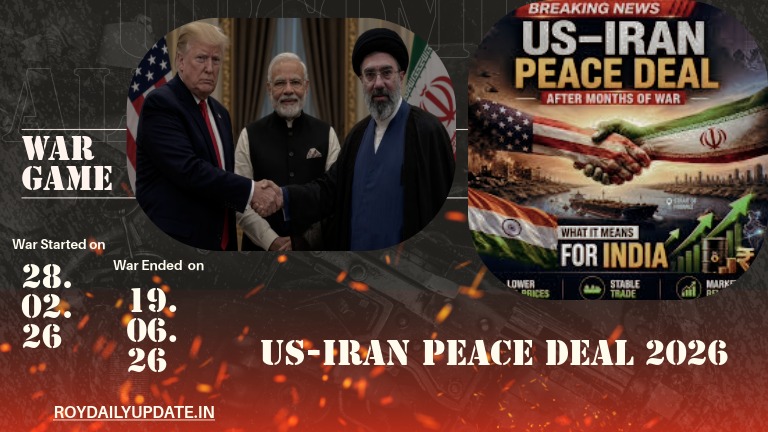
After more than three months of military confrontation, rising geopolitical tensions and repeated fears of a wider regional conflict, the United States and Iran have finally signed an interim peace agreement aimed at ending one of the most closely watched crises of 2026.
The agreement comes after 110 days of conflict that began with the first wave of attacks on February 28 and quickly escalated into a broader confrontation affecting military installations, global trade routes, energy markets and diplomatic relations across West Asia.
The announcement immediately triggered a positive reaction from global financial markets. Crude oil prices fell sharply as traders reduced their expectations of supply disruptions, while stock markets across Asia, Europe and North America welcomed the easing of tensions.
For India, the development could be particularly significant. Lower oil prices and reduced geopolitical uncertainty have already prompted some economists to improve growth forecasts for the coming financial year.
However, despite the optimism, analysts warn that the newly signed Memorandum of Understanding (MoU) is only the first step toward a broader settlement. Several of the most difficult issues remain unresolved and could determine whether peace becomes permanent or merely temporary.
What Exactly Did the US and Iran Agree To?
The agreement signed between Washington and Tehran is not a comprehensive peace treaty.
Instead, it is an interim framework designed to stop active military hostilities and create a roadmap for future negotiations.
The deal includes:
- A halt to major military operations
- Reopening of critical maritime routes
- Commitments to begin formal negotiations
- Confidence-building measures between both sides
- Reduction in immediate escalation risks
One of the most important outcomes is the reopening of the Strait of Hormuz, through which nearly one-fifth of the world’s oil supply passes.
Any disruption to this route has historically triggered panic in energy markets.
The agreement therefore provides immediate relief to oil-importing nations, including India.
Has the War Officially Ended?
The answer is complicated.
While active fighting has largely stopped, many experts hesitate to call the agreement a complete end to the conflict.
Several major disputes have been postponed rather than resolved.
Negotiators from both countries are expected to continue discussions in Switzerland, where the next phase of talks will focus on the most contentious issues.
Adding to the uncertainty, US officials have publicly warned that military action could resume if Iran violates any part of the agreement.
As a result, analysts describe the current situation as a fragile peace rather than a final settlement.
The Biggest Unresolved Issue: Iran’s Nuclear Programme
Perhaps the most important question remains unanswered.
The United States originally entered the conflict with the goal of limiting Iran’s nuclear capabilities and reducing potential threats to American interests and regional allies.
However, the interim agreement does not provide a final solution regarding Iran’s nuclear activities.
Key issues still unresolved include:
- Iran’s uranium stockpile
- Future enrichment levels
- International inspections
- Long-term nuclear commitments
- Security guarantees
Because these matters were deferred to future negotiations, the success of the peace process will largely depend on what happens during the next 60 days of diplomacy.
Many analysts believe the nuclear issue will ultimately determine whether the agreement survives.
Why Global Markets Reacted Positively
Financial markets hate uncertainty.
For months, investors feared that the conflict could spread across the region and threaten global energy supplies.
The peace agreement has significantly reduced those concerns.
Oil Prices Fall
Crude oil prices immediately moved lower after the announcement.
Investors now expect:
- Lower supply risks
- Reduced shipping disruptions
- More stable energy markets
- Lower inflationary pressure
Since oil plays a crucial role in transportation, manufacturing and global trade, falling prices are often viewed positively by markets.
Stock Markets Gain
Lower geopolitical risk generally improves investor confidence.
Sectors that benefit from declining energy costs include:
- Airlines
- Manufacturing
- Logistics
- Consumer goods
- Chemicals
Global equity markets therefore responded favorably to the peace announcement.
Why the Deal Matters So Much for India
India is among the world’s largest crude oil importers.
Any rise in oil prices directly affects:
- Inflation
- Fiscal deficit
- Import costs
- Fuel prices
- Economic growth
The easing of tensions between the US and Iran has therefore been welcomed by Indian policymakers and investors.
Several economists now believe lower energy prices could support stronger economic performance in FY27.
Some financial institutions have already upgraded India’s growth outlook following the announcement.
Potential Benefits for India
Lower Crude Oil Import Bill
Cheaper oil reduces pressure on India’s trade balance.
Better Inflation Control
Lower fuel costs help keep inflation under control.
Stronger Consumer Spending
When fuel expenses decline, households often have more disposable income.
Improved Market Sentiment
Foreign investors generally prefer stable geopolitical environments.
These factors could provide additional support for India’s growth trajectory.
What Changed Militarily During the War?
Although the conflict has paused, military experts believe both countries learned important lessons.
US Military Achievements
According to strategic analysts, the United States managed to:
- Damage parts of Iran’s military infrastructure
- Disrupt sections of its nuclear programme
- Demonstrate regional military reach
- Protect critical allied assets
The conflict also highlighted the effectiveness of integrated missile defense systems developed over the last two decades.
New Challenges for the US
At the same time, the war exposed vulnerabilities.
Experts argue that US military bases in the region are no longer as secure as previously assumed.
Iran demonstrated its ability to threaten strategic assets through missile and drone attacks.
This represents a major shift in regional military dynamics.
How Iran Changed Its Strategy
One of the most significant lessons from the conflict was Iran’s evolving military approach.
Rather than directly confronting American forces, Tehran focused on disrupting the infrastructure supporting military operations.
Targets reportedly included:
- Air bases
- Fuel depots
- Radar installations
- Communications facilities
- Airports
- Command centers
Military analysts believe Iran intentionally targeted the logistical foundation of American power projection.
This strategy forced adjustments in military deployments and challenged long-standing assumptions about security in the region.
What Could Change in West Asia Going Forward?
The consequences of the conflict may continue long after the shooting stops.
Several geopolitical shifts are already being discussed.
Greater Strategic Importance of the Strait of Hormuz
Iran’s ability to influence one of the world’s most important energy routes has become more apparent.
Gulf Nations May Diversify Partnerships
Some regional countries may seek broader security relationships rather than relying heavily on a single partner.
Regional Alliances Could Shift
The war exposed differences among several Gulf countries, potentially complicating future regional cooperation efforts.
Impact on Israel-Arab Relations
The conflict may also affect ongoing attempts to improve relations between Israel and various Arab nations.
These developments could reshape the political landscape of West Asia for years to come.
What Happens Next?
Attention now turns to the upcoming negotiations in Switzerland.
The talks will focus on:
- Nuclear issues
- Security guarantees
- Verification mechanisms
- Regional stability measures
- Long-term peace framework
The next 60 days are likely to determine whether the interim agreement evolves into a permanent peace settlement.
If negotiators succeed, the region could experience a prolonged period of stability.
If talks fail, tensions could quickly return.
Final Verdict
The US-Iran peace agreement marks a significant turning point after 110 days of conflict that rattled global markets and raised fears of a broader regional war. The immediate benefits are already visible through lower oil prices, improved investor sentiment and stronger economic expectations for major oil-importing nations such as India.
However, the agreement does not resolve the most sensitive issues, particularly Iran’s nuclear programme. Instead, it creates a window for diplomacy and future negotiations.
For now, markets are celebrating peace, but the real test will come in the weeks ahead as negotiators attempt to transform a temporary ceasefire into a lasting settlement. Until then, the world will continue watching developments closely, knowing that the future of energy markets, regional stability and global economic confidence may depend on what happens next.
Frequently Asked Questions (FAQs)
Did the US-Iran peace deal officially end the war?
The agreement halted major hostilities, but several critical issues remain unresolved. Many analysts consider it a temporary peace framework rather than a final settlement.
Why did oil prices fall after the agreement?
Markets believe the risk of disruptions to oil supplies, especially through the Strait of Hormuz, has decreased significantly.
How does the deal affect India?
Lower crude oil prices could reduce inflation, improve economic growth, lower import costs and support market sentiment.
What is the biggest unresolved issue?
Iran’s nuclear programme remains the most significant unresolved issue and will be discussed in future negotiations.
Could fighting resume?
Yes. Both countries have indicated that violations of the agreement could trigger renewed tensions or military action.
Disclaimer
This article is intended for informational and educational purposes only. Geopolitical developments, diplomatic negotiations and economic forecasts may change rapidly based on future events. Readers should consult official government statements, international agencies and financial advisors before making investment or policy-related decisions based on geopolitical news.
Do Follow for more info @ http://roydailyupdate.in
NSE IPO Could Become India’s Biggest Listing: Here’s Why Investors Are Watching Closely
Telegram Banned in India Ahead of NEET Re-Exam 2026
Jaiprakash Associates Delisting: What Happens to 6.5 Lakh Shareholders ?
IRCTC Share Price Crashes Near Key Support: Buy, Hold or Sell After the Recent Fall?
2 thoughts on “US-Iran Peace Deal After 110 Days of War: Oil Prices Fall, Markets Rally and India Gets a Growth Boost”