France Heatwave 2026:
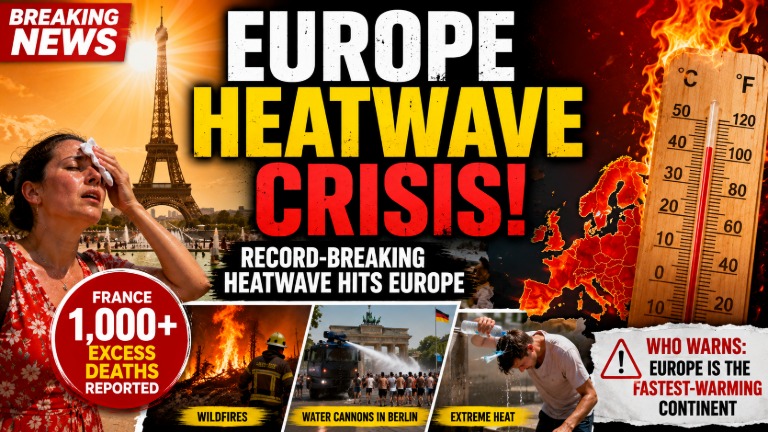
France has reported more than 1,000 excess deaths during one of the most severe heatwaves in its modern history, highlighting the growing dangers of extreme weather across Europe. The unprecedented temperatures have pushed healthcare systems to their limits, fueled destructive wildfires, disrupted transportation networks, and renewed global concerns about climate change.
According to France’s national public health agency, the sharp rise in mortality occurred during the peak of the record-breaking heatwave, particularly between Wednesday and Friday, when temperatures reached extraordinary levels across much of the country.
The crisis is no longer confined to France alone. Several European nations, including Germany, the Czech Republic, Denmark, Sweden and others, have experienced record temperatures, severe thunderstorms, wildfires and infrastructure failures, making this one of the continent’s most dangerous climate events in recent years.
France Reports Sharp Rise in Heat-Related Deaths
French health authorities revealed that the country recorded approximately 1,000 additional deaths over just three days compared with normal mortality levels.
Before the heatwave began, France typically registered between 900 and 1,000 deaths per day during April and May. However, at the peak of the extreme temperatures, daily deaths climbed dramatically.
Officials reported:
- More than 1,200 deaths on Wednesday
- More than 1,400 deaths on Thursday
- More than 1,400 deaths on Friday
Public Health France emphasized that these figures remain preliminary and could increase as additional reports, particularly those involving deaths at home, continue to be verified.
Health officials noted that approximately 85% of those who died were aged 65 years or older, confirming that elderly citizens remain the most vulnerable during prolonged periods of extreme heat.
Paris Region Among the Worst Affected
The Paris metropolitan region experienced some of the highest mortality increases.
Authorities observed that many deaths occurred inside private homes, suggesting that prolonged indoor heat exposure became a serious health risk, particularly among elderly individuals living alone.
Large portions of France remained under the country’s highest-level red heat alert, affecting nearly three-quarters of the nation at the peak of the heatwave.
Although cooling measures were introduced in major cities—including public fountains, cooling centres and emergency response teams—the intensity and duration of the heat overwhelmed many communities.
WHO Warns Europe Is the Fastest-Warming Continent
The World Health Organization (WHO) issued one of its strongest climate warnings yet.
WHO Director-General Dr. Tedros Adhanom Ghebreyesus stated that Europe is warming twice as fast as the global average, making it the fastest-heating continent on Earth.
According to WHO estimates:
- Around 150 million Europeans have been exposed to dangerous temperatures.
- More than 1,300 excess deaths have already been linked to the current heatwave across Europe.
- Schools have been forced to close in several regions.
- Electricity grids have faced significant pressure due to soaring cooling demand.
WHO described heat stress as a “silent killer” because many victims suffer from dehydration, cardiovascular complications or respiratory problems before realizing the severity of their condition.
Climate Change Making Extreme Heat More Frequent
Scientists continue to connect the extraordinary temperatures with long-term climate change.
Researchers from World Weather Attribution, an international climate science collaboration, concluded that the recent European heatwave would have been virtually impossible without human-induced climate change.
Their rapid scientific assessment found that:
- Such an event would have been extremely unlikely only five decades ago.
- Similar heatwaves are now approximately 200 times more likely than they were twenty years ago.
- Rising greenhouse gas emissions continue to increase both the frequency and intensity of extreme weather events.
Experts warn that what was once considered a “once-in-a-generation” heatwave may now become a regular occurrence unless global emissions decline substantially.
Germany Breaks Temperature Records
Germany also experienced unprecedented temperatures during the same period.
The town of Neißemünde, near the Polish border, recorded 41.7°C (107°F), establishing a new national temperature record.
The heat triggered numerous emergencies:
- Forest fires erupted in eastern and southwestern Germany.
- Firefighters battled blazes in forests still containing unexploded World War II ammunition.
- Hundreds of residents were evacuated from threatened communities.
- Ambulance services responded to hundreds of additional heat-related emergencies.
Berlin authorities even deployed police water cannons—not for crowd control, but to spray cooling water over residents and tourists gathered near the Brandenburg Gate.
Czech Republic and Denmark Also Set Records
Neighbouring countries experienced similarly extreme conditions.
The Czech Republic registered its highest temperature ever recorded at 41.1°C (106.4°F).
Denmark also established new national temperature records while simultaneously experiencing intense thunderstorms that produced over 1,100 lightning strikes within a short period.
The combination of extreme heat followed by violent storms illustrated the increasingly unstable weather patterns affecting Europe.
Sweden Reports Lightning Injuries
In Sweden, multiple visitors at the Tosselilla Sommarland amusement park were struck by lightning during severe thunderstorms that followed the heatwave.
Several people required hospital treatment, including one woman reported to have sustained serious injuries.
Meteorologists noted that powerful thunderstorms often develop after prolonged periods of exceptional heat as unstable atmospheric conditions intensify.
Wildfires Spread Across Europe
Extreme temperatures dramatically increased wildfire risks across central Europe.
Major fires burned through forests in Germany where unexploded wartime ammunition complicated firefighting efforts.
Authorities temporarily suspended some firefighting operations after explosions occurred within contaminated forest areas.
Emergency teams continued working around the clock to prevent flames from reaching nearby communities.
Transport Infrastructure Under Pressure
The prolonged heat also disrupted transportation.
Germany reported:
- Railway delays caused by overheated infrastructure.
- Heat damage to tram tracks in Leipzig.
- Highway surfaces cracking under extreme temperatures.
- Train evacuations after storms interrupted power supplies.
One train carrying more than 600 passengers lost electricity after a fallen tree damaged overhead power lines, forcing emergency responders to evacuate passengers suffering from heat exhaustion.
Experts Urge Better Preparedness

Health experts say Europe must adapt rapidly to increasingly dangerous summers.
Suggested measures include:
- Expanding cooling centres.
- Strengthening emergency medical services.
- Increasing urban green spaces.
- Improving building insulation.
- Protecting elderly populations through community monitoring programmes.
- Upgrading electricity infrastructure to handle higher cooling demand.
Climate specialists stress that adaptation alone will not be enough without significant reductions in greenhouse gas emissions.
Outlook
Meteorological agencies expect temperatures to gradually shift toward eastern Europe, although several regions remain under heat advisories.
Authorities continue monitoring vulnerable populations while assessing the full health impact of the disaster.
As Europe faces another historic climate event, the latest figures from France serve as a stark reminder that extreme heat is becoming one of the continent’s deadliest natural hazards.
Frequently Asked Questions (FAQs)
Q1. How many excess deaths were reported in France during the heatwave?
France reported around 1,000 excess deaths during the peak of the record-breaking heatwave.
Q2. Which age group was most affected?
Around 85% of the victims were aged 65 years and above.
Q3. Which European country recorded the highest temperature?
Germany recorded 41.7°C, while the Czech Republic reached 41.1°C.
Q4. What did the WHO say about Europe?
WHO stated that Europe is the fastest-warming continent, heating at twice the global average.
Q5. Is climate change linked to this heatwave?
Yes. Scientists say the event would have been nearly impossible without human-driven climate change.
Disclaimer
This article is based on publicly available reports from international news agencies and official public health authorities available at the time of publication. Weather conditions, casualty figures and official assessments may change as additional verified information becomes available.
Do follow for more info @ http://roydailyupdate.in
Do Connect WhatsApp @ https://chat.whatsapp.com/K5POJK9KbpN8egjjOCaOw6