

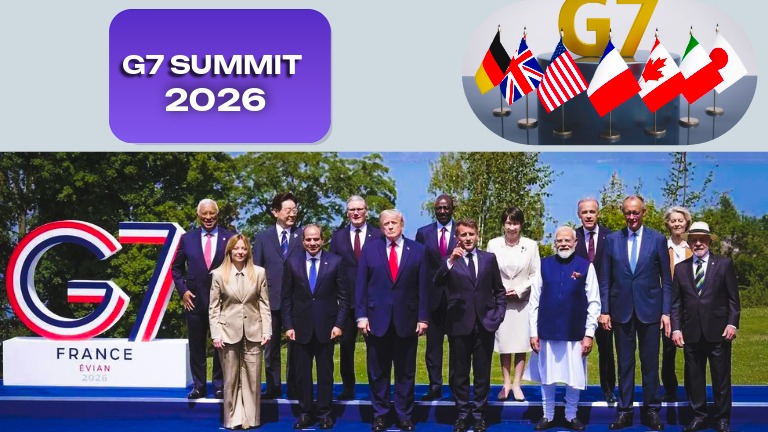

G7 Summit 2026: AI Emerges as the Biggest Battleground as Trump, Sam Altman and World Leaders Shape the Future
The 2026 G7 Summit concluded in France with one issue dominating global attention: artificial intelligence. While geopolitical crises, including the Russia-Ukraine conflict and the newly announced US-Iran peace framework, occupied much of the leaders’ agenda, the final day of the summit was largely defined by discussions about AI, economic competitiveness and the growing influence of American technology companies.
Held in the picturesque French resort town of Évian-les-Bains near the Alps, the summit brought together leaders from the world’s most advanced economies at a time when AI is rapidly transforming industries, economies and national security strategies.
The participation of some of the biggest names in artificial intelligence—including OpenAI CEO Sam Altman, Google DeepMind CEO Demis Hassabis and Anthropic CEO Dario Amodei—highlighted the importance of the technology in shaping the future global order.
For many observers, the discussions reflected a broader reality: the race for AI leadership is becoming as strategically important as energy security, military power and economic influence.
Why AI Became the Centerpiece of the G7 Summit
Over the past two years, artificial intelligence has evolved from a technology-sector topic into a major geopolitical issue.
Countries around the world are now competing to secure leadership in:
- Advanced AI research
- Semiconductor manufacturing
- Data infrastructure
- Cloud computing
- Cybersecurity
- Military applications of AI
The United States currently dominates much of the global AI ecosystem, with companies such as OpenAI, Google, Microsoft, Anthropic and Meta leading innovation.
However, European nations have increasingly expressed concerns regarding:
- AI governance
- Data privacy
- Market concentration
- Ethical use of AI
- National security implications
As a result, G7 leaders devoted substantial time to discussing how advanced AI systems should be regulated while still encouraging innovation.
Sam Altman, Demis Hassabis and AI Leaders Join Global Policymakers
One of the most notable aspects of this year’s summit was the direct involvement of AI industry leaders.
The attendance of:
- OpenAI CEO Sam Altman
- Google DeepMind CEO Demis Hassabis
- Anthropic CEO Dario Amodei
demonstrated how closely governments now view AI development as a strategic priority.
The executives participated in discussions surrounding:
AI Safety
Governments are increasingly focused on ensuring that advanced AI systems remain secure and aligned with human interests.
Economic Transformation
AI has the potential to reshape labor markets, productivity and economic growth across sectors.
Global Competition
Many countries are concerned about maintaining competitiveness in an increasingly AI-driven economy.
Regulation
Balancing innovation with oversight remains one of the biggest challenges facing policymakers.
US Dominance in AI Sparks Debate

One of the most sensitive topics discussed at the summit was America’s growing dominance in artificial intelligence.
Most of the world’s leading AI companies are headquartered in the United States, giving Washington significant influence over the direction of technological development.
Several European leaders have argued that:
- Greater international cooperation is needed.
- AI infrastructure should be diversified.
- Competition must be preserved.
- Global standards should be established.
The debate reflects broader concerns about technological sovereignty and dependence on a handful of major firms.
For Europe, reducing reliance on foreign technology providers has become a strategic objective.
Trump’s Position on AI and Economic Growth
US President Donald Trump used the summit to emphasize the role of innovation in driving economic growth.
The administration has consistently argued that excessive regulation could slow AI development and weaken America’s competitive advantage.
Trump’s participation in AI discussions comes at a critical time, as nations attempt to determine how emerging technologies should be governed.
Supporters of a lighter regulatory approach believe:
- Innovation flourishes under flexible rules.
- AI can boost productivity.
- Economic growth can accelerate.
- Businesses need freedom to experiment.
Critics, however, warn that insufficient oversight could create risks involving misinformation, cybersecurity and employment disruption.
The US-Iran Agreement Also Shaped Discussions
Although artificial intelligence dominated the final day, geopolitical tensions remained a major focus throughout the summit.
The recently announced US-Iran memorandum of understanding attracted significant international attention.
According to details discussed during the summit:
- Military operations are expected to cease.
- The Strait of Hormuz will remain open.
- Economic sanctions may be gradually eased.
- Nuclear negotiations will continue.
The agreement has already influenced global financial markets.
Oil Prices Respond
The reopening of the Strait of Hormuz has reduced fears regarding disruptions to global energy supplies.
As a result:
- Crude oil prices declined.
- Investor confidence improved.
- Inflation concerns eased.
For major energy-importing countries such as India, lower oil prices could provide economic benefits through reduced import costs and improved growth prospects.
G7 Leaders Push for Safe Shipping Through the Strait of Hormuz
Another important outcome from the summit was a joint statement supporting unrestricted maritime transit through the Strait of Hormuz.
The waterway remains one of the world’s most important energy chokepoints.
Any disruption can affect:
- Global oil supplies
- Shipping costs
- Fuel prices
- Fertilizer markets
- International trade
The G7 reaffirmed its support for free navigation and backed ongoing naval efforts to secure maritime routes in the Persian Gulf.
Russia and Ukraine Remain Key Concerns
Despite the attention on AI and Iran, the war in Ukraine continued to influence discussions.
British Prime Minister Keir Starmer indicated that leaders remain committed to supporting Ukraine and exploring additional sanctions against Russia.
Several participants emphasized:
- Continued military support for Ukraine.
- Economic pressure on Moscow.
- Protection of European security.
The conflict remains one of the defining geopolitical challenges facing Western nations.
Why the G7 Summit Matters for India
India was among the invited partner nations participating in the summit discussions.
The outcomes are particularly relevant for India because of several factors.
AI Opportunities
India is rapidly becoming one of the world’s largest digital economies.
Advances in AI could support:
- Healthcare
- Education
- Manufacturing
- Agriculture
- Financial services
Lower Energy Costs
The easing of tensions in West Asia could reduce pressure on India’s oil import bill.
Economic Growth
Stable energy prices and stronger global growth often benefit emerging economies.
Strategic Partnerships
India continues to strengthen cooperation with both Western nations and technology companies investing in AI infrastructure.
What Comes Next for Global AI Governance?
The discussions at the G7 suggest that artificial intelligence will remain at the center of international policymaking for years to come.
Key questions remain unanswered:
- Who will regulate advanced AI?
- How should countries share AI benefits?
- Can global standards be created?
- How will governments address job displacement?
- What safeguards are needed against misuse?
These issues are likely to dominate future international summits.
Many experts believe the decisions made over the next few years could determine how AI shapes economies and societies for decades.
Final Verdict
The 2026 G7 Summit may ultimately be remembered as the moment when artificial intelligence officially became a top geopolitical priority. While leaders discussed conflicts in Ukraine, Russia sanctions and the emerging US-Iran peace framework, the strongest focus on the final day was the future of AI and the growing influence of American technology companies.
With OpenAI’s Sam Altman, DeepMind’s Demis Hassabis and Anthropic’s Dario Amodei participating alongside world leaders, the summit highlighted how AI is no longer just a technological issue—it is now a central economic, security and diplomatic challenge.
As governments seek to balance innovation with regulation, the debates that began in France could shape the future of the global digital economy for years to come.
Frequently Asked Questions (FAQs)
What was the main focus of the final day of the G7 Summit 2026?
Artificial intelligence, economic growth and the future regulation of AI technologies were the primary topics discussed.
Which AI leaders attended the summit?
OpenAI CEO Sam Altman, Google DeepMind CEO Demis Hassabis and Anthropic CEO Dario Amodei participated in discussions.
Why is AI important for G7 countries?
AI is expected to influence economic growth, national security, productivity, healthcare and global competitiveness.
Did the G7 discuss the US-Iran agreement?
Yes. Leaders discussed the newly announced US-Iran peace framework and supported safe shipping through the Strait of Hormuz.
How could the summit affect India?
India could benefit from lower oil prices, stronger global economic stability, AI partnerships and increased investment opportunities.
Disclaimer
This article is for informational and educational purposes only. International negotiations, policy decisions and geopolitical developments can change rapidly. Readers should refer to official government statements and credible news sources for the latest updates on the G7 Summit, artificial intelligence policies and global diplomatic developments.
Do follow for more info @ http://roydailyupdate.in
Do Connect WhatsApp @ https://chat.whatsapp.com/K5POJK9KbpN8egjjOCaOw6
NSE IPO Could Become India’s Biggest Listing: Here’s Why Investors Are Watching Closely
IRCTC Share Price Crashes Near Key Support: Buy, Hold or Sell After the Recent Fall?
Telegram Banned in India Ahead of NEET Re-Exam 2026
4 thoughts on “G7 Summit 2026 Ends with High-Stakes AI Talks: Trump, Sam Altman and World Leaders Debate the Future of Technology”