

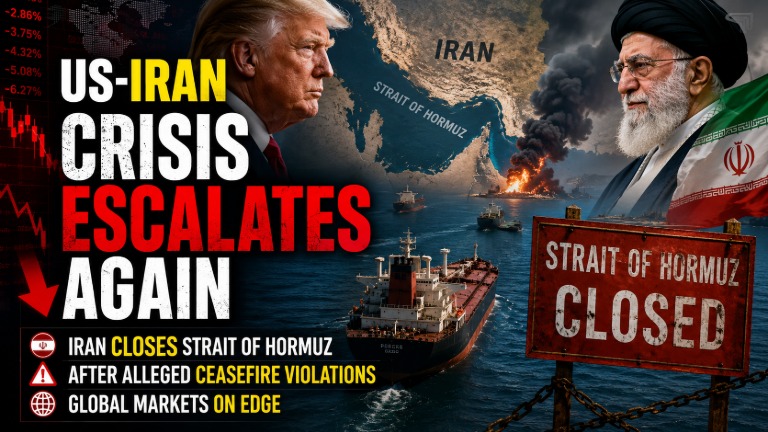
US-Iran Crisis Escalates Again
Iran Closes Strait of Hormuz Amid Fresh West Asia Tensions
Just days after the United States and Iran signed a preliminary agreement aimed at ending more than three months of conflict, fresh tensions have emerged in West Asia. Iran’s top military command announced the closure of the strategically important Strait of Hormuz, accusing the United States and Israel of violating commitments made under the ceasefire arrangement.
The development has once again raised concerns about regional stability, global oil supplies, shipping routes, and the future of the fragile peace process that many hoped would end months of uncertainty.
The Strait of Hormuz is considered one of the world’s most important maritime trade routes, carrying a significant portion of global crude oil exports. Any disruption in this narrow waterway immediately attracts international attention because of its direct impact on energy prices and economic stability.
Why Did Iran Close the Strait of Hormuz?
According to Iranian military officials, the closure is a response to what Tehran describes as repeated violations of the recently announced ceasefire understanding involving the United States and Israel.
Iran’s military leadership stated that shutting the strait is only the “first step” and warned that additional measures could follow if what it calls “aggression” continues.
The announcement came shortly after renewed violence in Lebanon despite efforts to maintain calm following the broader US-Iran understanding.
Ceasefire Under Pressure
The latest escalation follows reports of heavy fighting between Israeli forces and Hezbollah in southern Lebanon.
Lebanese authorities reported dozens of casualties from Israeli airstrikes, while Israel confirmed the deaths of several soldiers. These incidents placed immediate pressure on the wider regional peace framework that had been announced earlier.
Although US officials confirmed that Israel and Hezbollah later agreed to another ceasefire arrangement, the renewed violence has complicated diplomatic efforts.
The situation has become particularly sensitive because negotiations scheduled in Switzerland between American and Iranian officials were postponed amid the renewed tensions.
What Is the Strait of Hormuz and Why Is It Important?
The Strait of Hormuz is one of the most critical shipping routes in the world.
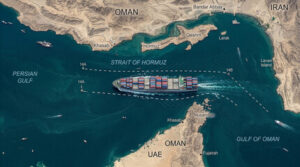
Located between Iran and Oman, the narrow passage connects the Persian Gulf to global markets. A large share of the world’s oil exports passes through this route every day.
Key reasons why the strait matters:
- Major oil-exporting nations use this route.
- Global energy supplies depend on uninterrupted shipping.
- Any disruption can lead to higher crude oil prices.
- Shipping and insurance costs often rise during regional conflicts.
- Global stock markets closely monitor developments in the area.
Because of its strategic significance, even temporary restrictions in the Strait of Hormuz can create ripple effects across international financial markets.
Impact on Global Oil Prices
Energy analysts are closely watching the latest developments.
Historically, geopolitical tensions involving the Strait of Hormuz have triggered sharp movements in crude oil prices. Traders fear that prolonged restrictions could disrupt energy supplies and increase transportation costs.
While markets initially welcomed the US-Iran peace understanding, Iran’s latest move has introduced fresh uncertainty.
If shipping disruptions continue, crude oil prices may witness renewed volatility in the coming weeks.
What Does This Mean for India?
India is among the world’s largest importers of crude oil and LPG.
During the recent conflict, India had already started diversifying its energy imports by increasing purchases from countries outside the Gulf region.
Reports indicate that India significantly expanded LPG imports from the United States and other countries while reducing dependence on traditional suppliers in West Asia.
This diversification strategy may help reduce the impact of any prolonged disruption in the Strait of Hormuz.
However, sustained tensions could still affect:
- Fuel prices
- Inflation
- Transportation costs
- Import bills
- Corporate earnings
Indian policymakers and energy companies are therefore monitoring developments very closely.
Switzerland Talks: The Next Major Test
Diplomatic efforts are continuing despite the latest setback.
Technical-level discussions involving American and Iranian representatives are expected to take place in Switzerland. Mediators from Pakistan and Qatar are also expected to participate.
These talks are considered crucial because they will address several unresolved issues that were left out of the initial memorandum of understanding.
Among the most sensitive subjects are:
- Iran’s nuclear programme
- Sanctions relief
- Regional security arrangements
- Future military commitments
- Long-term peace guarantees
The outcome of these negotiations could determine whether the current ceasefire evolves into a durable peace agreement.
US Position Remains Firm
Senior American officials have reiterated that Washington expects Iran to comply with all commitments made under the preliminary agreement.
US leaders have also indicated that military options remain available if negotiations fail or if any party violates the agreed framework.
This stance reflects the delicate balance currently shaping the diplomatic process.
While both sides have expressed interest in avoiding further escalation, significant differences remain unresolved.
Israel-Hezbollah Conflict Adds Complexity
One of the biggest challenges facing negotiators is the continuing instability in Lebanon.
Although ceasefire announcements have been made, clashes between Israeli forces and Hezbollah have continued intermittently.
Regional analysts believe that lasting peace between the United States and Iran may be difficult to achieve unless tensions involving Hezbollah and Israel are also addressed.
This is why developments in Lebanon remain closely linked to the broader West Asia peace process.
Market Outlook: What Investors Should Watch
Financial markets around the world are expected to remain sensitive to developments in the region.
Investors should monitor:
- Updates from Switzerland negotiations
- Oil price movements
- Shipping activity through the Strait of Hormuz
- Statements from US, Iranian and Israeli officials
- Regional military developments
Energy, aviation, logistics and shipping companies are likely to remain in focus as the situation evolves.
Final Verdict
The closure of the Strait of Hormuz marks a significant challenge for the fragile peace process that emerged after months of conflict in West Asia.
While the US-Iran agreement initially brought optimism to global markets, recent events show that major disagreements remain unresolved. The coming diplomatic talks in Switzerland could determine whether the region moves toward lasting stability or experiences another period of escalation.
For investors, businesses and governments worldwide, the Strait of Hormuz remains one of the most important geopolitical flashpoints to watch in 2026.
FAQs
Why did Iran close the Strait of Hormuz?
Iran says it closed the waterway because of alleged ceasefire violations by the United States and Israel.
Why is the Strait of Hormuz important?
It is one of the world’s busiest oil shipping routes and a key artery for global energy supplies.
Will oil prices increase?
Oil prices could become volatile if shipping disruptions continue or regional tensions escalate further.
How will India be affected?
India may face higher energy costs if disruptions persist, although diversification of imports could reduce some risks.
Are US-Iran peace talks still happening?
Yes, diplomatic efforts are continuing, with technical discussions expected to take place in Switzerland.
Disclaimer
This article is intended solely for informational and educational purposes. Geopolitical situations can change rapidly, and readers should refer to official government statements and verified news sources for the latest developments. This article does not constitute financial, investment, legal, or geopolitical advice.
Do follow for more info @ http://roydailyupdate.in
Do Connect WhatsApp @ https://chat.whatsapp.com/K5POJK9KbpN8egjjOCaOw6
2 thoughts on “US-Iran Crisis Escalates Again: Iran Closes Strait of Hormuz After Alleged Ceasefire Violations, Global Markets on Edge”