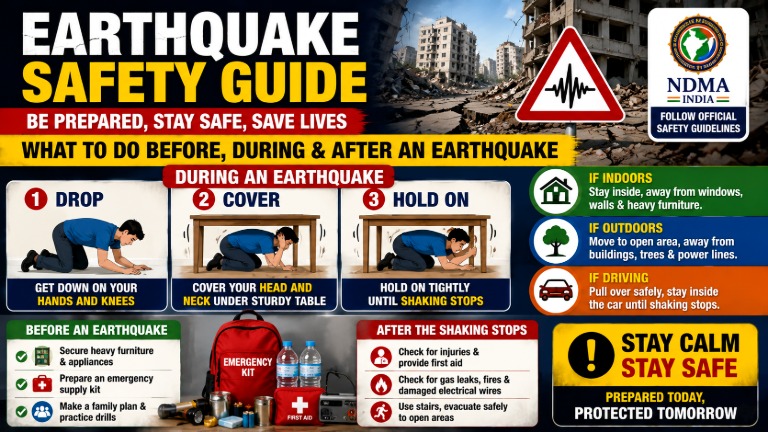
Earthquake Safety Guide:
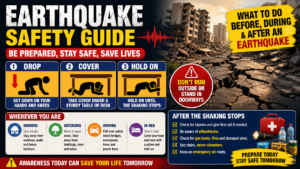
Earthquakes can occur without warning, making them one of the most unpredictable natural disasters. While scientists continue to improve earthquake monitoring systems, accurately predicting the exact time and location of an earthquake remains impossible. Because of this uncertainty, preparedness is the most effective way to reduce injuries and save lives.
Whether you are at home, in school, at work, travelling, or outdoors, knowing the correct safety procedures can make a significant difference during an earthquake. Experts from disaster management agencies around the world recommend one simple principle that everyone should remember: Drop, Cover, and Hold On.
This article explains everything you need to know before, during, and after an earthquake.
Why Earthquake Preparedness Matters
Every year, thousands of earthquakes occur across the world. While many are too small to be felt, stronger earthquakes can cause building collapses, landslides, fires, power outages, and severe damage to infrastructure.
Countries located in active seismic zones face greater risks, but earthquakes can occur in many regions. Preparing in advance reduces panic and allows families to respond quickly and safely.
What to Do During an Earthquake
Remember: Drop, Cover and Hold On
This is the internationally recommended safety procedure.
- Drop immediately onto your hands and knees.
- Cover your head and neck under a sturdy desk or table.
- Hold on firmly until all shaking completely stops.
Do not stand or run while the ground is shaking.
If You Are Inside a Building
If you are indoors when an earthquake begins:
- Stay inside until the shaking ends.
- Stay away from windows and glass panels.
- Avoid balconies and exterior walls.
- Keep away from heavy cupboards, shelves, televisions, mirrors and appliances.
- Protect your head and neck using your arms if no table is available.
If you are in bed:
- Stay where you are.
- Cover your head with a pillow.
- Protect your neck and remain in place unless something heavy could fall on you.
Running outside during strong shaking is dangerous because falling glass, bricks and debris cause many injuries.
If You Are Outdoors
People outside should:
- Move quickly toward an open area.
- Stay away from buildings, trees, electric poles and overhead wires.
- Avoid bridges, signboards and boundary walls.
- Drop to the ground and protect your head until the shaking ends.
If You Are Driving
Drivers should remain calm and follow these steps:
- Pull over safely.
- Avoid stopping beneath flyovers, bridges or power lines.
- Switch on hazard lights if necessary.
- Apply the parking brake.
- Stay inside the vehicle until the earthquake stops.
Roads and bridges may become damaged after major earthquakes, so drive carefully afterwards.
What To Do After the Earthquake

Even after the main shaking ends, danger may continue.
Check for Injuries
- Help injured family members.
- Provide first aid if trained.
- Call emergency services when required.
Watch for Aftershocks
Smaller earthquakes known as aftershocks often follow major earthquakes.
If another tremor begins:
- Drop
- Cover
- Hold On
Repeat the safety procedure immediately.
Inspect Your Surroundings
Check for: 
- Gas leaks
- Broken electrical wires
- Water pipe damage
- Structural cracks
- Fire hazards
If you smell gas or notice sparks, switch off utilities only if it is safe.
Leave Damaged Buildings Carefully
If your building appears unsafe:
- Use staircases.
- Never use elevators.
- Move to an open area.
- Wait for official instructions before returning.
Emergency Kit Every Family Should Have
Experts recommend preparing an emergency disaster kit containing: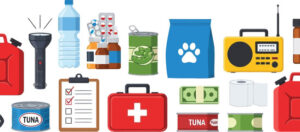
- Drinking water
- Dry food
- Flashlight
- Batteries
- First-aid kit
- Essential medicines
- Power bank
- Important documents
- Mobile charger
- Emergency contact list
- Battery-powered radio
- Face masks
Keep this kit in an easily accessible location.
Preparing Your Home
Simple safety improvements can reduce injuries:
- Secure heavy furniture to walls.
- Install safety latches on cabinets.
- Keep heavy objects on lower shelves.
- Know how to shut off gas and electricity.
- Create a family emergency meeting point.
Practice earthquake drills regularly with children.
Common Mistakes to Avoid
Do not:
- Run outside during shaking.
- Use elevators.
- Stand in doorways unless they are structurally reinforced.
- Stay near windows.
- Panic or push others.
Importance of Following Official Instructions
During emergencies, rely only on official government agencies for updates. Avoid spreading rumours or unverified social media messages.
Authorities may issue evacuation orders, road closures or emergency shelter information after significant earthquakes.
Final Thoughts
Earthquakes cannot be prevented, but their impact can be greatly reduced through awareness and preparation. Learning the simple “Drop, Cover, and Hold On” technique, maintaining an emergency kit, and following official safety guidelines can protect you and your family during a disaster.
Preparedness saves lives. Spend a few minutes today creating an emergency plan so you know exactly what to do when the next earthquake strikes.
Frequently Asked Questions (FAQs)
Q1. What is the first thing to do during an earthquake?
Drop to the ground, take cover under sturdy furniture, and hold on until shaking stops.
Q2. Should I run outside during an earthquake?
No. Stay indoors unless you are already outside.
Q3. Is it safe to use elevators after an earthquake?
No. Always use stairs.
Q4. What are aftershocks?
Smaller earthquakes that occur after the main quake.
Q5. What emergency supplies should every family keep?
Water, food, medicines, flashlight, batteries, first-aid kit, documents and power bank.
Q6. Why should heavy furniture be secured?
To prevent injuries caused by falling furniture during shaking.
Q7. Where should I stand if I’m outdoors?
Move to an open area away from buildings and power lines.
Q8. How can families prepare in advance?
Create an emergency plan, prepare a disaster kit and practice earthquake drills.
Disclaimer
This article is for educational and public awareness purposes only. During any earthquake or disaster, always follow instructions issued by your local government, disaster management authorities, and emergency response agencies.
Do Follow for more info @http://roydailyupdate.in
Do Connect WhatsApp @ https://chat.whatsapp.com/K5POJK9KbpN8egjjOCaOw6