

Global Earthquake Update:
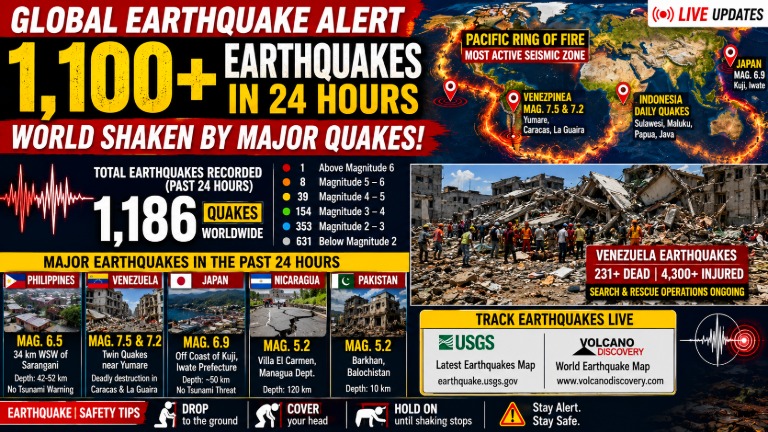
The Earth has experienced an extraordinary burst of seismic activity over the past 24 hours, with more than 1,100 earthquakes recorded globally. While most of these tremors were too weak to be felt by people, several powerful earthquakes struck different parts of the world, raising concerns among scientists, governments, and emergency response agencies.
According to global seismic monitoring agencies, including the United States Geological Survey (USGS) and other international earthquake tracking centers, approximately 1,186 earthquakes were detected worldwide within a single day. Among them, a devastating 6.5-magnitude earthquake hit the southern Philippines, while Venezuela continued to struggle with the aftermath of catastrophic twin earthquakes measuring 7.5 and 7.2 magnitude that have already claimed hundreds of lives.
Japan, Indonesia, Pakistan, Nicaragua, Mexico, Chile, Alaska, and several Pacific regions also experienced continuous seismic activity, highlighting how active Earth’s tectonic plates remain in 2026.
Although such numbers may appear alarming, geologists explain that thousands of earthquakes occur every month, with the majority being minor tremors that cause no damage. However, when multiple strong earthquakes occur within a short period across different continents, public attention naturally increases.
More Than 1,100 Earthquakes Recorded Worldwide
Global earthquake monitoring systems recorded approximately 1,186 earthquakes during the last 24 hours.
The breakdown of recorded earthquakes is as follows:
- 1 earthquake above Magnitude 6.0
- 8 earthquakes between Magnitude 5.0 and 6.0
- 39 earthquakes between Magnitude 4.0 and 5.0
- 154 earthquakes between Magnitude 3.0 and 4.0
- 353 earthquakes between Magnitude 2.0 and 3.0
- More than 630 earthquakes below Magnitude 2.0
Experts point out that earthquakes below magnitude 2 are generally detected only by sensitive scientific instruments and are rarely noticed by people.
Philippines Records Strongest Earthquake of the Day
The most powerful earthquake recorded during the latest 24-hour period occurred near Sarangani in the Davao Region of the Philippines.
Earthquake Details
- Magnitude: 6.5
- Location: 34 km southwest of Sarangani
- Depth: Approximately 42–52 km
- Tsunami Warning: None issued
The earthquake struck offshore near Mindanao Island, causing strong shaking across several provinces.
Residents reported buildings swaying, people rushing outdoors, and temporary power interruptions in some locations. Fortunately, because the earthquake occurred at an intermediate depth and away from densely populated cities, widespread destruction was avoided.
Authorities are nevertheless monitoring hundreds of aftershocks that continue to affect the region.
The Philippines lies directly on the Pacific Ring of Fire, making it one of the world’s most earthquake-prone countries.
Venezuela Continues Rescue Operations After Deadly Twin Earthquakes
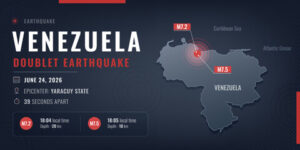
While the Philippines experienced the strongest earthquake of the day, the humanitarian crisis remains centered in Venezuela, where rescue teams continue searching for survivors following devastating twin earthquakes.
The earthquakes measured:
- Magnitude 7.5
- Magnitude 7.2
Both earthquakes struck within seconds of each other near Yumare, causing severe destruction across northern Venezuela.
The hardest-hit areas include:
- Caracas
- La Guaira
- Coastal towns
- Residential neighborhoods
- Commercial districts
Entire apartment buildings collapsed, hotels were reduced to rubble, roads cracked open, and communication infrastructure suffered extensive damage.
According to official figures released by authorities, at least 235 people have died, while more than 4,300 people have been injured.
Thousands remain displaced as rescue workers continue to search beneath collapsed structures.
International rescue teams from multiple countries have joined local emergency personnel to assist in search-and-rescue operations.
Japan Experiences Another Powerful Offshore Earthquake
Japan also experienced a significant earthquake off its northeastern coast.
Japan Earthquake Highlights
- Magnitude: 6.9
- Location: Near Kuji, Iwate Prefecture
- Depth: Approximately 50 km
Despite the strong magnitude, Japan reported minimal structural damage thanks to its world-class earthquake-resistant infrastructure.
Modern building codes, advanced seismic warning systems, and emergency preparedness once again demonstrated why Japan remains one of the best-prepared countries for earthquakes.
No tsunami warning was issued.
Officials continue monitoring aftershocks along Japan’s eastern coastline.
Indonesia Sees Continuous Daily Seismic Activity
Indonesia remained one of the busiest seismic zones globally.
Multiple earthquakes were recorded across:
- Sulawesi
- Papua
- Maluku
- Java
Most tremors measured below magnitude 5 and caused little or no damage.
Indonesia experiences thousands of earthquakes annually because it also sits along the Pacific Ring of Fire.
Scientists continue closely monitoring volcanic and tectonic activity throughout the Indonesian archipelago.
Pakistan and Nicaragua Also Experience Moderate Earthquakes
Several moderate earthquakes also occurred across Asia and Central America.
Pakistan
A 5.2-magnitude earthquake struck Barkhan district in Balochistan at a relatively shallow depth.
Residents reported noticeable shaking, although no significant casualties have been reported.
Nicaragua
A 5.2-magnitude earthquake occurred near Villa El Carmen at an intermediate depth.
Authorities stated that no major infrastructure damage has been identified so far.
Minor Earthquakes Continue Across North and South America
Earthquake monitoring agencies also detected numerous smaller tremors throughout the Americas.
Notable locations include:
- California (Petrolia)
- Redwood Valley
- Alaska
- Mexico
- Chile
- Puerto Rico
These earthquakes ranged between Magnitude 2 and 4 and are considered normal for tectonically active regions.
California, in particular, experiences hundreds of minor earthquakes every month due to movement along the San Andreas Fault system.
Why Are So Many Earthquakes Happening?
One question many people ask whenever multiple earthquakes occur worldwide is:
“Is the Earth becoming more active?”
According to seismologists, the answer is generally no.
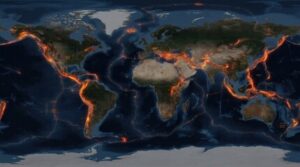
Earth experiences thousands of earthquakes every day because its outer shell is divided into several massive tectonic plates.
These plates constantly move, collide, slide past one another, or pull apart.
Whenever accumulated stress between these plates is suddenly released, an earthquake occurs.
Most earthquakes happen beneath oceans or in sparsely populated regions, meaning they often go unnoticed.
However, when strong earthquakes strike populated areas, they receive widespread media attention.