

Dharmendra Pradhan Resigns as Cockroach Protest Ends:
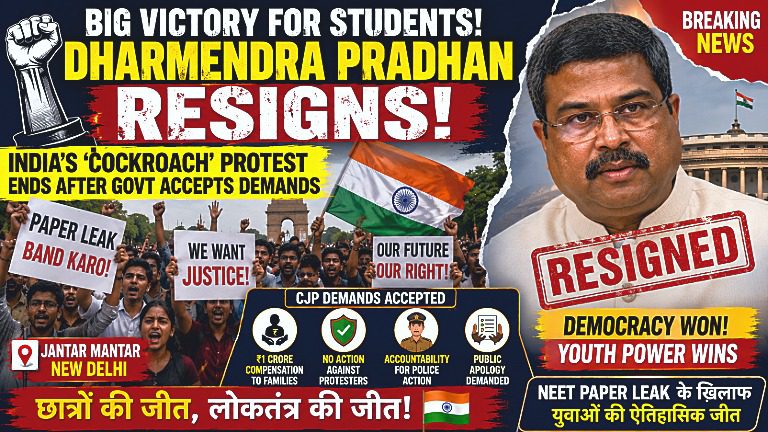
In one of the most dramatic political developments of 2026, Union Education Minister Dharmendra Pradhan resigned following weeks of nationwide protests over the alleged NEET examination paper leak, marking a significant victory for the youth-led Cockroach Janta Party (CJP) movement.
The resignation came after sustained demonstrations across India demanding accountability for repeated examination irregularities. Shortly after Pradhan announced his decision to step down, leaders of the CJP declared that they would end their nationwide agitation after the government accepted their principal demands.
The development represents one of the biggest public protest victories against the Union government in recent years and has sparked widespread debate about examination reforms, student welfare, and government accountability.
Education Minister Announces Resignation
Dharmendra Pradhan announced his resignation through a post on the social media platform X on July 25, 2026, saying that he had submitted his resignation to Prime Minister Narendra Modi.
In his message, Pradhan said he respected the aspirations and expectations of India’s youth and did not want the ongoing situation to be exploited by forces seeking to create instability.
The resignation came amid heightened tensions in New Delhi, where thousands of students had gathered at Jantar Mantar demanding his removal from office following allegations of large-scale examination paper leaks.
His decision marked the culmination of weeks of political pressure, public protests, and growing criticism from opposition parties and civil society groups.
Why Students Started Protesting
The nationwide demonstrations were triggered by allegations of paper leaks in major competitive examinations, particularly the NEET 2026 examination, which affected millions of medical aspirants across the country.
Students argued that repeated examination leaks had:
Undermined merit-based selection.
Destroyed confidence in the examination system.
Increased mental stress among candidates.
Delayed admissions and career opportunities.
Raised serious concerns about transparency and accountability.
The protests quickly evolved into a nationwide youth movement demanding systemic reforms rather than temporary administrative measures.
Thousands of students assembled in Delhi and other major cities, calling for stronger anti-cheating laws, accountability within the Education Ministry, and better protection for honest candidates.
Rise of the Cockroach Janta Party (CJP)
The Cockroach Janta Party (CJP) emerged as an unconventional youth movement that used satire, symbolism, and social media to mobilize students across India.
Its leaders argued that ordinary students, often ignored in national policymaking, had united to demand fairness in public examinations.
Despite its unusual name, the movement rapidly gained national attention through peaceful demonstrations, online campaigns, and widespread participation from students preparing for competitive examinations.
The protests soon became one of the largest youth-led movements witnessed in recent years, attracting support from activists, education experts, opposition leaders, and civil society organizations.
Violence Intensified Public Anger
Public anger intensified after clashes between protesters and security personnel near Parliament and Jantar Mantar earlier in the week.
Student groups alleged that police used:
* Baton charges
* Tear gas
* Forceful crowd dispersal measures
The visuals circulating on social media further strengthened public support for the movement and intensified demands for accountability.
Several opposition leaders criticized the handling of the demonstrations and accused the government of suppressing peaceful protests.
The incidents transformed what initially began as an examination-related protest into a broader debate about democratic rights, youth participation, and freedom of peaceful assembly.
Government Begins Negotiations
As protests continued to expand, the Union Government initiated discussions with representatives of the student movement.
Senior ministers met CJP leaders to explore possible solutions and reduce tensions.
Earlier, Prime Minister Narendra Modi had announced several measures, including:
Establishment of fast-track courts for paper leak cases.
Preparation of a new Anti-Paper Leak Bill.
Stronger punishment for those involved in examination fraud.
Assurance that students’ interests would remain the government’s highest priority.
However, protest leaders maintained that legislative measures alone would not restore public confidence unless accountability was fixed at the ministerial level.
They insisted that Dharmendra Pradhan’s resignation remained their primary demand, arguing that leadership responsibility was essential for rebuilding trust in India’s examination system.
Government Accepts Key Demands, Protest Ends
Following hours of discussions between senior Union ministers and representatives of the Cockroach Janta Party (CJP), the government agreed to the movement’s principal demands, paving the way for the suspension of nationwide protests.
CJP spokesperson Ashutosh Ranka announced that the organization had decided to withdraw its agitation “in good faith” after receiving official assurances from the government.
The movement urged students gathered at Delhi’s Jantar Mantar and protest sites across the country to return home peacefully, emphasizing that the struggle had achieved its immediate objectives.
Celebrations soon erupted in several cities, with students waving the Indian flag, distributing sweets, and chanting patriotic slogans after hearing the announcement.
What Were CJP’s Main Demands?
Throughout the movement, the Cockroach Janta Party consistently maintained four key demands:
1. Resignation of Education Minister Dharmendra Pradhan
This remained the central demand throughout the protest.
Students argued that accountability for repeated examination failures should begin at the highest level of the Education Ministry.
2. Financial Support for Families
The movement sought ₹1 crore compensation for families of students who allegedly died by suicide following examination-related stress and controversies.
Student leaders described this demand as recognition of the emotional and psychological impact caused by repeated examination irregularities.
3. No Action Against Protesters
CJP requested that no criminal or disciplinary action be taken against students who participated peacefully in demonstrations across the country.
4. Accountability for Police Action
The organization also demanded accountability over allegations of excessive police force during demonstrations in Delhi.
According to protest leaders, these demands were accepted following discussions with government representatives, leading to the decision to end the agitation.
Sonam Wangchuk Welcomes the Development
Environmental activist Sonam Wangchuk, who had earlier observed a prolonged hunger strike in support of students, welcomed the Education Minister’s resignation.
Calling it “a victory of peace, patience and perseverance,” Wangchuk said the movement demonstrated that democratic protests can influence public policy when conducted peacefully.
His support throughout the protest significantly increased national attention on the issue.
Rahul Gandhi Reacts
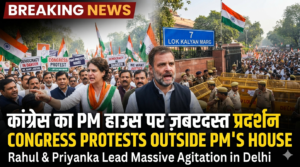
Congress leader Rahul Gandhi welcomed Dharmendra Pradhan’s resignation but argued that further accountability was necessary.
He stated that those responsible for the alleged use of force against protesting students should also face action.
Several opposition parties described the resignation as evidence that sustained democratic protests can compel governments to respond to public concerns.
PM Modi’s Response
Before the resignation, Prime Minister Narendra Modi had announced multiple initiatives aimed at restoring confidence in India’s examination system.
These included:
* Fast-track courts for paper leak cases.
* A proposed Anti-Paper Leak Bill.
* Stronger punishment for organized examination fraud.
* Greater protection for honest students.
The Prime Minister emphasized that safeguarding students’ futures remained one of the government’s highest priorities.
However, many protesters insisted that legislative reforms alone would not restore confidence without political accountability, which ultimately became the defining issue of the movement.
Political Significance of the Resignation
Dharmendra Pradhan’s resignation is being viewed as one of the most significant political developments of 2026.
Political observers believe the episode demonstrates:
Growing influence of youth-led movements.
Increasing public demand for accountability.
Rising concern over transparency in competitive examinations.
The importance of education reforms in national politics.
The protest also highlighted how social media campaigns can rapidly evolve into nationwide movements with substantial political impact.
What Happens Next?
Although the protests have ended, attention will now shift toward the government’s promised reforms.
Students across the country will closely watch:
Introduction of the Anti-Paper Leak Bill.
Implementation of stronger examination security.
Faster prosecution of those involved in paper leaks.
Greater transparency in conducting national examinations.
Measures to rebuild confidence among millions of aspirants.
The coming months are expected to be crucial in determining whether these promises translate into meaningful reforms.
Timeline of Events
* NEET paper leak allegations emerge, triggering nationwide outrage.
* Student organizations launch demonstrations across India.
* Cockroach Janta Party (CJP) becomes the leading protest movement.
* Large protests take place at Jantar Mantar in New Delhi.
* Clashes between protesters and police intensify tensions.
* PM Modi announces fast-track courts and a proposed Anti-Paper Leak Bill.
* Protesters continue demanding Dharmendra Pradhan’s resignation.
* Dharmendra Pradhan resigns on July 25, 2026.
* Government reportedly accepts CJP’s major demands.
* CJP officially calls off nationwide protests.
Key Highlights (English)
✅ Dharmendra Pradhan resigned as Union Education Minister.
✅ CJP ended nationwide protests after government assurances.
✅ Movement centered on NEET paper leak controversy.
✅ Students celebrated the announcement across India.
✅ PM Modi announced legal reforms against paper leaks.
✅ Anti-Paper Leak Bill expected to strengthen examination security.
✅ Opposition leaders demanded broader accountability.
✅ Protest became one of India’s biggest youth movements in recent years.
ಪ್ರಮುಖ ಅಂಶಗಳು (Kannada)
✅ ಕೇಂದ್ರ ಶಿಕ್ಷಣ ಸಚಿವ ಧರ್ಮೇಂದ್ರ ಪ್ರಧಾನ ರಾಜೀನಾಮೆ ನೀಡಿದ್ದಾರೆ.
✅ ಸಿಜೆಪಿ ರಾಷ್ಟ್ರವ್ಯಾಪಿ ಪ್ರತಿಭಟನೆಯನ್ನು ಹಿಂತೆಗೆದುಕೊಂಡಿದೆ.
✅ ನೀಟ್ ಪ್ರಶ್ನೆಪತ್ರಿಕೆ ಸೋರಿಕೆ ಪ್ರಕರಣ ಪ್ರತಿಭಟನೆಗೆ ಪ್ರಮುಖ ಕಾರಣವಾಯಿತು.
✅ ದೇಶದಾದ್ಯಂತ ವಿದ್ಯಾರ್ಥಿಗಳು ಸಂಭ್ರಮಾಚರಣೆ ನಡೆಸಿದರು.
✅ ಪರೀಕ್ಷಾ ಸೋರಿಕೆ ತಡೆಗೆ ಹೊಸ ಕಾನೂನು ತರಲು ಕೇಂದ್ರ ಸರ್ಕಾರ ನಿರ್ಧರಿಸಿದೆ.
✅ ಫಾಸ್ಟ್ ಟ್ರ್ಯಾಕ್ ನ್ಯಾಯಾಲಯಗಳ ಸ್ಥಾಪನೆ ಘೋಷಿಸಲಾಗಿದೆ.
✅ ವಿದ್ಯಾರ್ಥಿಗಳ ಭವಿಷ್ಯ ರಕ್ಷಣೆ ಸರ್ಕಾರದ ಪ್ರಮುಖ ಆದ್ಯತೆ ಎಂದು ಪ್ರಧಾನಿ ತಿಳಿಸಿದ್ದಾರೆ.
✅ ಯುವಕರ ಹೋರಾಟ ದೇಶದ ರಾಜಕೀಯ ಚರ್ಚೆಗೆ ಹೊಸ ದಿಕ್ಕು ನೀಡಿದೆ.
Frequently Asked Questions (FAQs)
Why did Dharmendra Pradhan resign?
He resigned following sustained nationwide protests demanding accountability over repeated examination paper leak controversies.
What is the Cockroach Janta Party (CJP)?
CJP is a youth-led protest movement that organized demonstrations demanding transparency and accountability in India’s examination system.
Why were students protesting?
Students alleged that repeated examination paper leaks had undermined fairness and affected the future of millions of aspirants.
Has the protest officially ended?
Yes. CJP announced that it was withdrawing the protest after the government accepted its principal demands.
What reforms has the government promised?
The government has announced fast-track courts, tougher anti-paper leak legislation, and stronger examination security measures.
Disclaimer
This article is based on publicly available reports and official statements available at the time of publication. The situation may continue to evolve. Readers are encouraged to follow official government announcements and verified sources for the latest updates.
Do Follow For More Info @ http://roydailyupdate.in
Do WhatsApp @ https://chat.whatsapp.com/K5POJK9KbpN8egjjOCaOw6