

PM Modi Announces Anti-Paper Leak Bill; Parliament to Discuss New Law Next Week
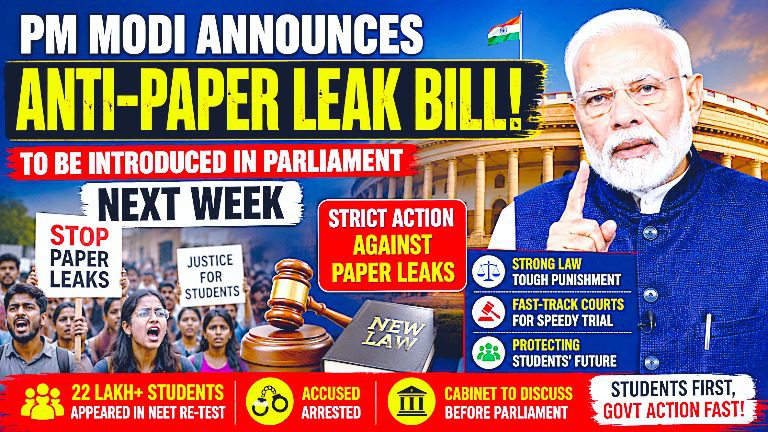
In a significant move aimed at restoring confidence in India’s examination system, Prime Minister Narendra Modi has announced that the Central Government will introduce a new Anti-Paper Leak Bill in Parliament during the ongoing Monsoon Session.
The announcement comes amid nationwide protests following the NEET 2026 paper leak controversy, which triggered widespread anger among students, parents, and opposition parties.
Addressing students through a video message, the Prime Minister said the proposed legislation would include strict legal provisions against those involved in examination paper leaks and would be passed as early as possible after parliamentary approval.
The government believes the new law will strengthen the integrity of competitive examinations and deter future instances of question paper leaks.
Cabinet to Discuss Bill Before Parliament Introduction
According to Prime Minister Modi, the proposed legislation will first be discussed during the Union Cabinet meeting on Friday.
Following Cabinet approval, the Bill is expected to be introduced in Parliament on Monday, marking the beginning of the second week of the Monsoon Session.
The Prime Minister stated that suggestions from Cabinet ministers would be incorporated before finalising the draft legislation.
“A Bill with provisions for strong action against paper leaks will be brought to Parliament, and we will try to pass it as early as possible,” PM Modi said in his video address.
The Centre believes swift legislative action is necessary to protect the interests of millions of students appearing for competitive examinations across the country.
PM Modi: Paper Leaks Cause Pain to Millions of Students
Describing examination paper leaks as a serious national issue, PM Modi said the problem affects not only students but also their parents, who invest years of hard work and resources preparing for competitive exams.
He stated that paper leaks are “extremely painful” for lakhs of students and their families, emphasizing that the government considers protecting students’ future a top priority.
The Prime Minister highlighted that multiple steps have already been taken since allegations regarding the NEET 2026 paper leak first emerged around two-and-a-half months ago.
Government Highlights Action Already Taken
During his address, PM Modi listed several measures already implemented by the government.
According to him:
Authorities have arrested several accused persons linked to the alleged paper leak.
The accused are currently in judicial custody.
The government ensured that affected students did not lose an academic year.
A nationwide NEET re-examination was successfully conducted using additional administrative resources.
Around 22 lakh students reportedly appeared for the re-test.
Fast-track courts have already been established for speedy trials in paper leak cases.
The Prime Minister said conducting the re-examination quickly was one of the government’s biggest responsibilities to safeguard students’ academic future.
Fast-Track Courts Already Operational
PM Modi also reiterated that fast-track courts have already been set up to ensure speedy investigation and punishment in examination-related offences.
According to the government, quicker judicial proceedings are expected to discourage organised cheating networks and restore public trust in national examinations.
The proposed Anti-Paper Leak Bill is expected to complement these judicial reforms by providing a stronger legal framework against offenders.
Congress Questions PM Modi’s Announcement
While Prime Minister Narendra Modi described the proposed Anti-Paper Leak Bill as a major step towards protecting students, the announcement immediately sparked strong reactions from opposition leaders, who questioned the government’s handling of the NEET 2026 controversy.
The Congress party argued that introducing a new law alone would not restore students’ confidence unless accountability was fixed at the highest level.
Party leaders claimed that students across the country had been demanding not only stricter laws but also responsibility from those overseeing the examination system.
Jairam Ramesh Criticises Government’s Response
Congress General Secretary Jairam Ramesh said the Prime Minister had finally addressed the issue after nearly two months but failed to answer several important questions raised by students and opposition parties.
According to Ramesh, the government should have explained:
Why the alleged paper leak was initially denied.
Why students had to stage nationwide protests.
Why police action was taken against several protesters.
What accountability would be fixed within the Education Ministry.
He further alleged that the Education Ministry had earlier refused to acknowledge the paper leak before the Parliamentary Standing Committee.
The Congress maintained that legislative reforms should be accompanied by administrative accountability to rebuild trust in the examination process.
Rahul Gandhi Targets Government
Congress leader Rahul Gandhi also criticised the Prime Minister’s video message.
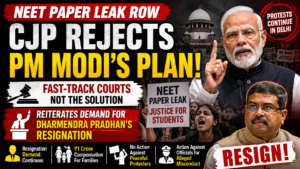
He alleged that the address avoided the opposition’s primary demand regarding the resignation of Union Education Minister Dharmendra Pradhan.
Rahul Gandhi stated that students were expecting clear accountability instead of only assurances regarding future reforms.
The Congress has consistently maintained that fixing responsibility within the government is essential to prevent similar incidents in future competitive examinations.
Sonam Wangchuk Ends 26-Day Hunger Strike
Meanwhile, environmental activist Sonam Wangchuk announced the end of his 26-day indefinite hunger strike after receiving assurances from the Central Government.
According to Wangchuk, senior Union Ministers JP Nadda and Jitendra Singh met him late Thursday night at Medanta Hospital in Gurugram.
Following the meeting, Wangchuk stated that the government had assured him that the concerns raised by students would be addressed through concrete measures.
He officially ended his fast in the presence of senior leaders from the Apex Body of Leh-Ladakh and later shared the development on social media.
His decision marked an important moment in the ongoing student movement, which has witnessed nationwide demonstrations over examination integrity.
Why the Anti-Paper Leak Bill Matters
The proposed legislation is expected to become one of the most significant education reforms in recent years.
If passed, the new law could provide:
Stronger punishment for individuals involved in paper leaks.
Faster investigation through special mechanisms.
Speedier trials in fast-track courts.
Better protection for students appearing in competitive examinations.
Improved transparency and accountability in examination processes.
Strong deterrence against organised cheating networks.
Education experts believe the effectiveness of the law will ultimately depend on its implementation and enforcement across all examination agencies.
Political Significance of the Move
The announcement comes at a politically sensitive time, with the Monsoon Session of Parliament underway and the NEET controversy dominating national debate.
The government has positioned the proposed Bill as a major reform to safeguard students’ interests, while opposition parties continue to argue that legislative action must be accompanied by institutional accountability and systemic improvements.
As Parliament prepares to debate the Bill, discussions are expected to focus on:
The scope of punishments under the proposed law.
Mechanisms to prevent future examination leaks.
Coordination between central and state agencies.
Protection of students’ rights and examination integrity.
Strengthening digital and physical security during examinations.
The outcome of these debates could shape the future framework for conducting competitive examinations across India.
What Happens Next?
The government’s roadmap for the proposed legislation is expected to follow these steps:
Friday: Union Cabinet to review and discuss the draft Bill.
Monday: Introduction of the Anti-Paper Leak Bill in Parliament during the Monsoon Session.
Parliamentary Debate: Members from both ruling and opposition parties will discuss the provisions.
Passage of the Bill: The government has expressed its intention to secure approval at the earliest.
Implementation: Once enacted, the law will provide a legal framework for stricter action against paper leaks and examination-related fraud.
The coming days will be crucial as Parliament debates the proposed legislation and stakeholders closely watch how the government addresses both legal reforms and broader concerns over examination integrity.
Conclusion
Prime Minister Narendra Modi’s announcement of a new Anti-Paper Leak Bill marks one of the government’s biggest legislative responses to the NEET 2026 paper leak controversy. The proposed law aims to introduce stricter punishment for those involved in examination leaks, strengthen the legal framework, and restore confidence in India’s competitive examination system.
While the government says the Bill, along with fast-track courts and recent arrests, demonstrates its commitment to protecting students, opposition parties continue to demand greater accountability and structural reforms within the education system.
As the Bill is expected to be introduced during the Monsoon Session of Parliament, all eyes will now be on the parliamentary debate and the final provisions of the legislation. For millions of students preparing for competitive examinations, the coming days could shape the future of examination security and transparency in India.
Key Highlights (English)
🇮🇳 PM Narendra Modi announced a new Anti-Paper Leak Bill.
🏛️ The Bill will be discussed by the Union Cabinet before being introduced in Parliament.
⚖️ The government aims to pass the law at the earliest during the Monsoon Session.
📚 The proposed legislation will provide strict punishment for paper leak offenders.
👨🎓 PM Modi said protecting students’ future remains the government’s top priority.
📄 Around 22 lakh students reportedly appeared for the NEET re-test.
⚖️ Fast-track courts have already been established for speedy trials.
🗣️ Congress criticised the announcement, demanding accountability from the Education Ministry.
✊ Rahul Gandhi questioned the government’s response and reiterated demands regarding the Education Minister.
🤝 Activist Sonam Wangchuk ended his 26-day hunger strike after receiving government assurances.
ಪ್ರಮುಖ ಅಂಶಗಳು (Kannada)
🇮🇳 ಪರೀಕ್ಷಾ ಪ್ರಶ್ನೆಪತ್ರಿಕೆ ಸೋರಿಕೆ ತಡೆಯಲು ಹೊಸ ಕಾನೂನು ತರಲು ಪ್ರಧಾನಿ ಮೋದಿ ಘೋಷಣೆ ಮಾಡಿದ್ದಾರೆ.
🏛️ ಮಸೂದೆಯನ್ನು ಮೊದಲು ಕೇಂದ್ರ ಸಚಿವ ಸಂಪುಟ ಪರಿಶೀಲಿಸಲಿದೆ.
📜 ನಂತರ ಸಂಸತ್ತಿನಲ್ಲಿ ಮಂಡಿಸಿ ಶೀಘ್ರದಲ್ಲೇ ಅಂಗೀಕರಿಸಲು ಸರ್ಕಾರ ಪ್ರಯತ್ನಿಸಲಿದೆ.
⚖️ ಪ್ರಶ್ನೆಪತ್ರಿಕೆ ಸೋರಿಕೆ ನಡೆಸುವವರ ವಿರುದ್ಧ ಕಠಿಣ ಶಿಕ್ಷೆಯ ವಿಧೇಯಕ ತರಲಾಗುತ್ತದೆ.
👨🎓 ವಿದ್ಯಾರ್ಥಿಗಳ ಭವಿಷ್ಯವನ್ನು ರಕ್ಷಿಸುವುದು ಸರ್ಕಾರದ ಮೊದಲ ಆದ್ಯತೆ ಎಂದು ಪ್ರಧಾನಿ ಹೇಳಿದರು.
📝 ಸುಮಾರು 22 ಲಕ್ಷ ವಿದ್ಯಾರ್ಥಿಗಳು NEET ಮರುಪರೀಕ್ಷೆ ಬರೆದಿದ್ದಾರೆ ಎಂದು ಸರ್ಕಾರ ತಿಳಿಸಿದೆ.
⚖️ ಪ್ರಕರಣಗಳ ತ್ವರಿತ ವಿಚಾರಣೆಗೆ ಫಾಸ್ಟ್ ಟ್ರ್ಯಾಕ್ ನ್ಯಾಯಾಲಯಗಳು ಈಗಾಗಲೇ ಕಾರ್ಯನಿರ್ವಹಿಸುತ್ತಿವೆ.
🗣️ ಕಾಂಗ್ರೆಸ್ ಸರ್ಕಾರದ ಕ್ರಮವನ್ನು ಟೀಕಿಸಿ ಶಿಕ್ಷಣ ಸಚಿವರ ಜವಾಬ್ದಾರಿಯನ್ನು ಪ್ರಶ್ನಿಸಿದೆ.
✊ ರಾಹುಲ್ ಗಾಂಧಿ ಸರ್ಕಾರದ ಪ್ರತಿಕ್ರಿಯೆಯನ್ನು ಟೀಕಿಸಿದ್ದಾರೆ.
🤝 ಸರ್ಕಾರದ ಭರವಸೆಯ ನಂತರ ಸೋನಂ ವಾಂಗ್ಚುಕ್ ತಮ್ಮ 26 ದಿನಗಳ ಉಪವಾಸವನ್ನು ಅಂತ್ಯಗೊಳಿಸಿದ್ದಾರೆ.
Frequently Asked Questions (FAQs)
1. What did PM Modi announce regarding paper leaks?
PM Modi announced that the government will introduce an Anti-Paper Leak Bill in Parliament with strict legal provisions against examination paper leaks.
2. When will the Bill be introduced?
The government plans to introduce the Bill in Parliament during the second week of the Monsoon Session after approval by the Union Cabinet.
3. Why is the Bill being introduced?
The Bill has been proposed following the NEET 2026 paper leak controversy to strengthen examination security and ensure strict punishment for offenders.
4. What action has already been taken?
According to the government, several accused have been arrested, fast-track courts have been established, and a NEET re-test was conducted for affected students.
5. Why did opposition parties criticise the announcement?
Opposition leaders argued that, along with a new law, the government should also ensure accountability within the education system and address concerns raised by protesting students.
Disclaimer
Disclaimer: This article is based on publicly available reports and official statements available at the time of publication. Legislative proposals are subject to Cabinet approval and parliamentary debate before becoming law. Readers are advised to follow official government notifications and parliamentary proceedings for the latest updates.
Do Follow For More Info @ http://roydailyupdate.in
Do WhatsApp @ https://chat.whatsapp.com/K5POJK9KbpN8egjjOCaOw6